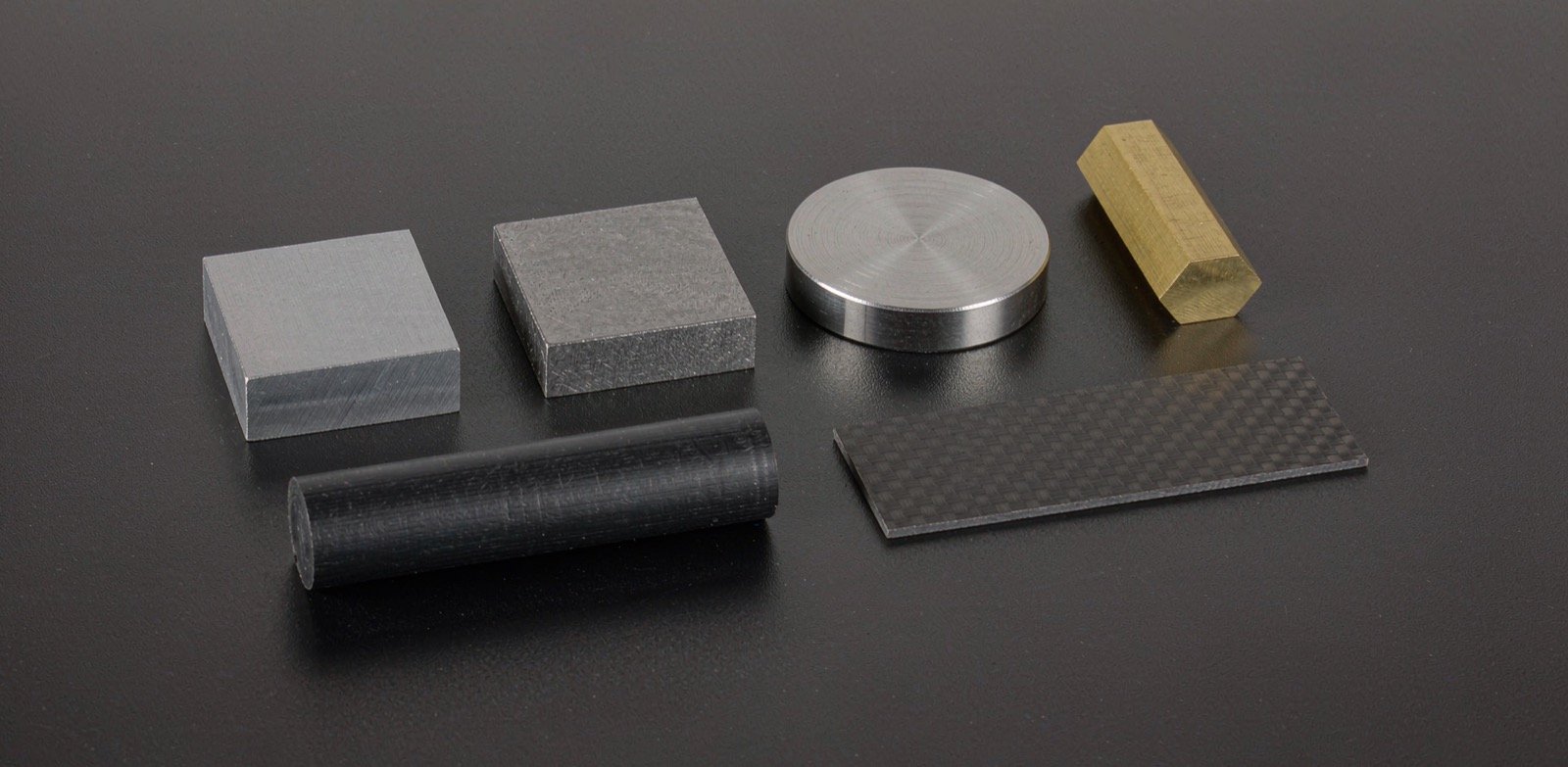
Most material decisions go wrong in the same way: someone picks a grade first and works backwards. The parts that ship on time and hit budget do it the other way around. Here is the sequence we walk through with buyers every week — use it before you send your next RFQ.
Start with the function, not the grade
The first question is never “6061 or 7075?” It is “what does this part have to survive?” Before naming a material, answer four things:
- Loads. Static, cyclic, or impact? A bracket holding a sensor needs a fraction of the strength of a fixture that gets clamped and unclamped ten thousand times.
- Environment. Moisture, salt spray, chemicals, washdowns, or sustained heat will eliminate half the list before price ever comes up.
- What “good enough” means. Critical tolerances on mating surfaces, cosmetic surfaces, weight budget — write them down, because each one narrows the field.
- Quantity and timing. Fifty parts this quarter and fifty every quarter after are two different material conversations.
The four families that cover most CNC jobs
Roughly nine out of ten parts we machine fall into one of these families. If you start here, you are rarely wrong:
| Family | Workhorse grades | Pick it when… |
|---|---|---|
| Aluminum | 6061-T6, 7075-T6, 6082, 5083 | You want light weight, good strength, fast machining and natural corrosion resistance at a sensible price. The default for brackets, enclosures, jigs and fixtures. |
| Carbon & alloy steel | 1018, 1045 / S45C, 4140 / 42CrMo4, 4340 | Strength and wear resistance matter more than weight — shafts, gears, tooling, machine components. |
| Stainless steel | 303, 304 / 316L, 17-4 PH | Corrosion resistance is a requirement, not a nice-to-have: food equipment, marine, medical, chemical exposure. |
| Engineering plastics | POM, PEEK, PTFE, Nylon PA6, UHMW PE | You need insulation, low friction, chemical inertness or weight savings — and metal would over-engineer the part. |
Within each family, the decision usually comes down to one trade-off. In aluminum it is 6061-T6 vs 7075-T6: 6061 machines faster, welds better and costs less; 7075 gives you roughly double the strength when the part has to be small and strong. In stainless it is 303 vs 316L: 303 is the free-machining choice for high-volume turned parts; 316L gives up some machinability for chloride corrosion resistance.
The full picture — 50+ grades with dual North American and Asian designations (4140 / 42CrMo4, 1045 / S45C, Grade 5 / TC4 and so on) — is in our material library, so you can match the spec on your drawing directly.
When to step up to titanium or copper alloys
Titanium (Grade 5 / TC4, Grade 2 / TA2) earns its place when strength-to-weight and corrosion resistance justify a material cost five to ten times higher and slower cutting speeds — aerospace structures, medical implants, high-performance motorsport parts. If none of those apply, it is an expensive detour.
Copper and brass (C36000, CuZn39Pb3, C11000, H62) win on electrical and thermal conductivity, and brass is one of the most machinable alloys there is — ideal for small, intricate fittings, connectors and non-sparking hardware.
Machinability is a cost driver, not a footnote
Two grades can have nearly identical mechanical properties and produce part costs 30% apart. 303 machines dramatically faster than 304; 1215 out-machines 1018 on high-volume turned work; free-machining brass cuts almost effortlessly. If your volumes are meaningful, ask which grade in the family machines best while still meeting spec — that question alone often pays for the whole project review.
Pair the material with the right finish
The grade and the surface treatment should be chosen together, not sequentially. Aluminum wants anodizing (Type II for corrosion and color, Type III hardcoat for wear); stainless wants passivation; carbon steel often wants black oxide or zinc plating; plastics sometimes need nothing at all. We manage finishing through vetted partners and verify coating thickness on every batch — the common options and typical specs are listed on our materials and finishing page.
Where the money actually goes
Buyers optimize material price because it is the easiest line to compare. Three places that usually return more:
- Quantity brackets. Setup cost amortized over 500 parts is a different conversation than over 10. If a demand forecast exists, share it — even roughly.
- Tolerances where they matter. Tighten only the datums that mate to something. Blanket ±0.01 mm on a non-critical face taxes every operation downstream.
- Design for the process. Deep narrow pockets, extreme aspect ratios and thin walls slow every pass. Sometimes a 15-minute design tweak beats any material substitution.
What to send us
To get a usable quote in 48 hours, include what you have — it does not need to be complete:
- Drawing or model: STEP, IGES, DWG, DXF, PDF with dimensions, X_T or SLDPRT
- Material if it is decided — or the application if it is not, and our engineers will recommend one, including cheaper options when they meet your spec
- Quantity (this order and expected annual volume)
- Surface finish and certification needs, if any
Not sure which grade fits?
Send us the drawing and the application — we will review manufacturability first, flag anything that drives cost or risk before production, and quote within 48 hours.
Request a Quote →